PEX pipes last 40 to 50+ years with proper installation. Properly installed PEX in standard residential conditions routinely hits the upper end of that range — matching or exceeding the practical lifespan of copper in many Houston-area homes where water chemistry causes copper corrosion.
Installation quality, water chemistry, UV exposure, and pipe type (PEX-A vs PEX-B vs PEX-C) all affect how long your PEX lasts. This guide breaks down lifespan by scenario, the type comparison, and when PEX outlasts copper. Already planning a repipe? See our whole-house repiping service for installation that maximizes PEX longevity.
What Exactly Is PEX Piping?
PEX stands for cross-linked polyethylene. Manufacturers create PEX by linking polyethylene molecules together through a chemical process. This cross-linking makes the material incredibly strong and flexible compared to regular plastic pipes.
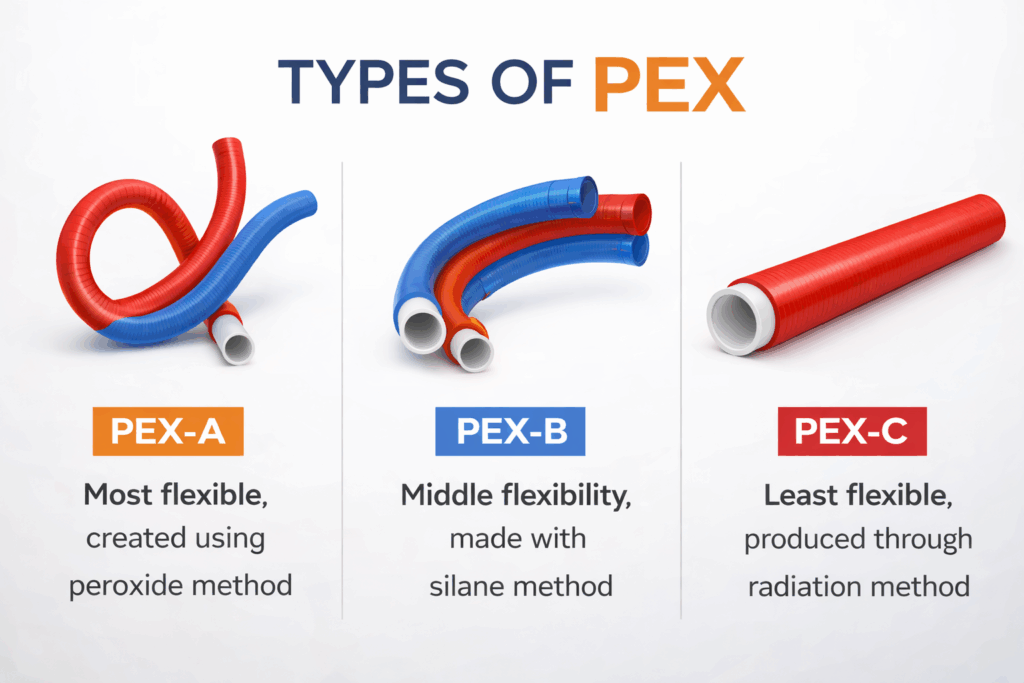
PEX comes in three main types, each made through a different manufacturing process:
PEX-A
- Peroxide method (most uniform cross-linking)
- Best freeze resistance — expands and recovers
- Easiest to install in tight spaces
- Highest cost per foot
- Brand example: Uponor
PEX-B
- Silane (moisture cure) method
- Best chlorine resistance — key for chlorinated city water
- Most cost-effective for whole-house repipes
- Preferred by many professional plumbers
- Brand examples: SharkBite, NIBCO
PEX-C
- Radiation cross-linking method
- Lowest cost per foot
- Stiffest — harder to install in tight runs
- Slightly lower burst pressure rating
- Less common in residential installs
PEX pipes come color-coded: red indicates hot water lines, blue marks cold water lines, and white works for either application. The color doesn't affect performance or lifespan — it's installer convenience.
Repipe doesn't have to be whole-home from day one. A targeted kitchen repipe service Houston gets your highest-use fixture group on new pipe first, then the rest phases in.
How Long Does PEX Last Compared to Other Pipes?
PEX lifespan compares favorably to other common piping materials. Copper has the slight edge on raw years, but PEX's resistance to corrosion in aggressive water often makes its effective lifespan equivalent or longer.
| Pipe Material | Expected Lifespan | Common Failure Modes |
|---|---|---|
| Copper (Type L) | 50–70 years | Pinhole leaks in acidic water; soldered joint failure |
| PEX | 40–50+ years | UV exposure if not protected; rare manufacturing defects |
| CPVC | 40–50 years | Brittle with age; cracks at fittings; chlorine degradation |
| Galvanized Steel | 20–50 years | Internal rust restricts flow; pinhole leaks at fittings |
| PVC (drain only) | 25–40 years | NOT for hot water supply — cracks under thermal stress |
| Polybutylene (banned) | 10–15 years | Chlorine degradation; class-action settled in 1990s |
The key insight: copper's 50–70 year rating assumes ideal water chemistry. In Houston, where chloramines and slightly aggressive water are common, copper's effective lifespan drops to 20–35 years before pinhole leaks start. PEX is immune to that failure mode entirely. For the full breakdown by repipe scope and cost, see copper vs PEX for whole-home repipes.
One thing this comparison leaves out: your supply lines and your sewer line age on completely different clocks. A PEX repipe does nothing for the cast iron or clay drain line buried under a Houston home of the same vintage, and replacing a sewer line is a separate project with its own budget.
What Affects How Long PEX Lasts?
The 40–50+ year rating assumes proper installation in normal conditions. These factors push PEX toward the upper or lower end of its lifespan range:
Installation Quality
The single biggest factor. Properly supported PEX with correct expansion connectors and clean crimps lasts decades. Sloppy install — tight bends, missing supports, bad crimps — cuts lifespan dramatically.
UV Light Exposure
PEX degrades when exposed to direct sunlight. Indoor PEX inside walls or in attics is fine. PEX run outdoors or in skylit areas needs UV-protective sleeving or painting to hit full lifespan.
Water Chemistry
PEX is corrosion-proof regardless of water acidity, which gives it a massive advantage over copper in Houston. Chlorine resistance varies by type — PEX-B handles heavily chlorinated water best.
Temperature
PEX is rated for water up to 180°F at 100 psi. Most residential hot water runs 120–140°F — well within spec. Continuous operation near max temperature shortens lifespan.
Freeze Cycles
PEX flexes when water freezes inside, then returns to shape after thawing. Repeated freeze-thaw cycles (rare in Houston) very slowly accumulate stress, but PEX still outlasts copper in this scenario.
Rodent Damage
Mice and squirrels in attics occasionally chew PEX. Copper resists this naturally. If you have rodent issues, route PEX through wall cavities rather than open attic runs.
Copper still wins on projected lifespan, but at 2-3× the material cost. Get a real quote for a copper repipe houston project side-by-side with the PEX version and compare the numbers on your actual house.
How Long Does PEX Last in Concrete, Underground, or Outdoors?
Standard 40–50+ year lifespan assumes PEX in protected indoor installations. Different environments change the math:
Inside walls + attics (protected)
Standard residential PEX install. Protected from UV, predictable temperature range, supported with proper hangers. Lifespan often exceeds the 50-year rating in real-world Houston homes.
Inside concrete slab
PEX works well embedded in concrete slabs (common in radiant floor heating). Slightly accelerated wear from thermal cycling, but the lack of joints inside concrete (PEX runs continuously, no fittings) makes it more reliable than copper for this use.
Buried underground
PEX is approved for direct burial in most jurisdictions. Lifespan depends on soil conditions — rocky soil shortens it; sandy or clay soil works fine. Use PEX-A for best freeze + soil-shift resistance underground.
Outdoor / exposed to sun
PEX exposed directly to sunlight degrades fast — UV light breaks down the polymer. Outdoor PEX must be sleeved, painted, or routed through insulation. With proper UV protection, lifespan returns to 40+ years.
PEX vs Copper: The Longevity Debate
Many homeowners wonder if PEX truly matches copper's legendary durability. While copper has a longer track record, PEX offers distinct advantages that often make its real-world lifespan equivalent or longer.
Where PEX Beats Copper
Cost: 30–50% cheaper than copper for materials and installation combined.
Freeze resistance: PEX expands when water freezes inside, then returns to normal size after thawing. Frozen copper bursts and requires immediate replacement.
Corrosion resistance: PEX is unaffected by water chemistry. Acidic or aggressive water eats through copper over time, creating pinhole leaks — a common Houston failure mode that drops copper's effective lifespan to 20–35 years.
Joint reliability: Fewer joints in PEX runs (long continuous lines vs copper's many soldered joints) means fewer failure points.
For the full side-by-side, see our PEX vs copper repiping deep dive.
Does PEX Type Matter for Longevity?
PEX-A, PEX-B, and PEX-C all offer similar lifespans under normal conditions. The subtle differences:
- PEX-A shows the best freeze resistance and most flexibility for tight installations. Best for retrofit repipes in older homes with tricky routing.
- PEX-B provides slightly better chlorine resistance, potentially extending lifespan in heavily chlorinated water. Costs less than PEX-A while maintaining excellent durability. Most professional plumbers prefer PEX-B for whole-house repiping projects.
- PEX-C represents the least expensive option but offers reduced flexibility, making installation more challenging in tight spaces. Slightly lower burst pressure ratings. All three meet industry standards and perform well in residential applications.
The connection method also affects longevity regardless of PEX type. Expansion fittings (used with PEX-A) and crimp/cinch fittings (used with PEX-B and PEX-C) both work when properly installed. Quality installation matters more than which fitting style you choose.
Considering PEX for a whole-house repipe? Free in-home assessment with material recommendations.
Call (832) 662-4288Is PEX Safe for Drinking Water?
Yes. PEX is certified for potable water use by NSF International (NSF 14 and NSF 61). It doesn't leach metals into your water the way copper or galvanized steel can, and it doesn't impart taste or odor in normal use.
One caveat: PEX should not be stored or transported in direct sunlight before installation — UV exposure can degrade the inner surface. Reputable plumbers use UV-protected PEX from sealed shipping. For more detail on drinking water safety, see our guide on whether PEX is safe for drinking water.
Pipe material sets what does not get added to your water on the way through the house. It has no effect on what arrived in the main. If taste, odor or chloramine is the concern rather than the plumbing itself, water filtration systems in Houston address it at the point of entry.
What's the Cost of a PEX Repipe?
If your existing pipes are nearing end-of-life and you're considering PEX, the cost lands in the $4,500 to $8,500 range for a typical 1,500 sq ft Houston home (PEX) vs $9,000+ for copper at the same scope. For the full cost breakdown by home size, see our guide on how much it costs to replumb a 1,500 sq ft house, or use our repipe cost calculator for an instant estimate based on your specific home.
Get Expert Advice on PEX for Your Home
Choosing the right piping material impacts your home's comfort and value for decades. The experienced team at Repipe Solutions Inc specializes in PEX installation and can help you understand if it's the right choice for your specific situation. We've installed thousands of PEX systems throughout Greater Houston and understand exactly what it takes to maximize lifespan and performance.
Don't trust your home's plumbing to inexperienced installers who might compromise PEX's excellent durability through poor workmanship. Professional whole-house repiping ensures your PEX system reaches its full 40–50+ year potential without problems.
Free PEX repipe consultation. Licensed Houston plumbers, fully itemized quote, no surprises.
Schedule Free EstimatePEX Lifespan FAQ
How long does PEX last?
PEX pipes last 40 to 50+ years with proper installation in standard residential conditions. The 50-year rating assumes protected indoor runs (inside walls, attics) with proper supports, no UV exposure, and water within normal temperature ranges. Properly installed PEX in Houston routinely meets or exceeds this lifespan.
How long does PEX last compared to copper?
Copper pipes are rated for 50–70 years vs PEX's 40–50+. But that comparison assumes ideal water chemistry. In Houston, where chloramines and slightly aggressive water are common, copper's effective lifespan drops to 20–35 years before pinhole leaks start. PEX is immune to that failure mode entirely, often making its real-world lifespan equivalent or longer.
What is the lifespan of PEX-A vs PEX-B vs PEX-C?
All three types offer similar 40–50+ year lifespans under normal conditions. PEX-A is most flexible and freeze-resistant. PEX-B has the best chlorine resistance and is most cost-effective for whole-house repipes. PEX-C is the least expensive but stiffest. Installation quality affects lifespan more than which type you choose.
How long does PEX last in concrete?
PEX embedded in concrete slabs lasts 40–50 years. It works well for radiant floor heating and slab plumbing applications because PEX runs continuously without joints inside the concrete — eliminating the failure points that affect copper installations in slabs. Use PEX-A for best long-term performance in concrete.
How long does PEX last underground?
PEX buried underground lasts 30–50 years depending on soil conditions. PEX-A is best for direct burial because of its superior freeze resistance and soil-shift flexibility. Rocky soil shortens lifespan; sandy or clay soil works fine. PEX is approved for direct burial in most jurisdictions.
Can PEX be used outside or in sunlight?
Bare PEX exposed to direct sunlight degrades quickly — lifespan drops to 5–15 years without UV protection because UV light breaks down the polymer. To use PEX outdoors, you must sleeve it, paint it, or route it through insulation. With proper UV protection, outdoor PEX returns to 40+ year lifespan.
What's the life expectancy of PEX in a Houston home?
In a typical Houston home with PEX installed inside walls and attics, expect 45–55 years of service life. Houston's water chemistry actually favors PEX over copper because of corrosion concerns with our slightly aggressive water. The lack of freeze risk in Houston also means PEX rarely encounters the freeze-thaw stress that affects northern installations.
Does PEX last longer than CPVC?
Yes — PEX typically lasts longer than CPVC in real-world conditions. Both are rated for similar 40–50 year lifespans, but CPVC becomes brittle with age and is more prone to cracking at fittings, especially in homes with chlorinated water. PEX remains flexible throughout its lifespan and doesn't develop the brittleness failure mode that affects aging CPVC.
Will PEX outlast a copper repipe?
Often, yes — especially in Houston. Copper's 50–70 year rating assumes ideal water chemistry. With Houston's chloramines and slightly aggressive water, copper develops pinhole leaks within 20–35 years for many homes. PEX's 40–50+ year lifespan is unaffected by water chemistry, so in Houston conditions, PEX commonly outlasts copper in practical terms.
What shortens PEX lifespan most?
The three biggest factors that cut PEX lifespan: (1) UV light exposure on unprotected outdoor runs, (2) poor installation — tight bends, missing supports, bad crimp connections, and (3) continuous operation at temperatures near the 180°F max rating. Avoid these and PEX routinely hits 50+ years.