

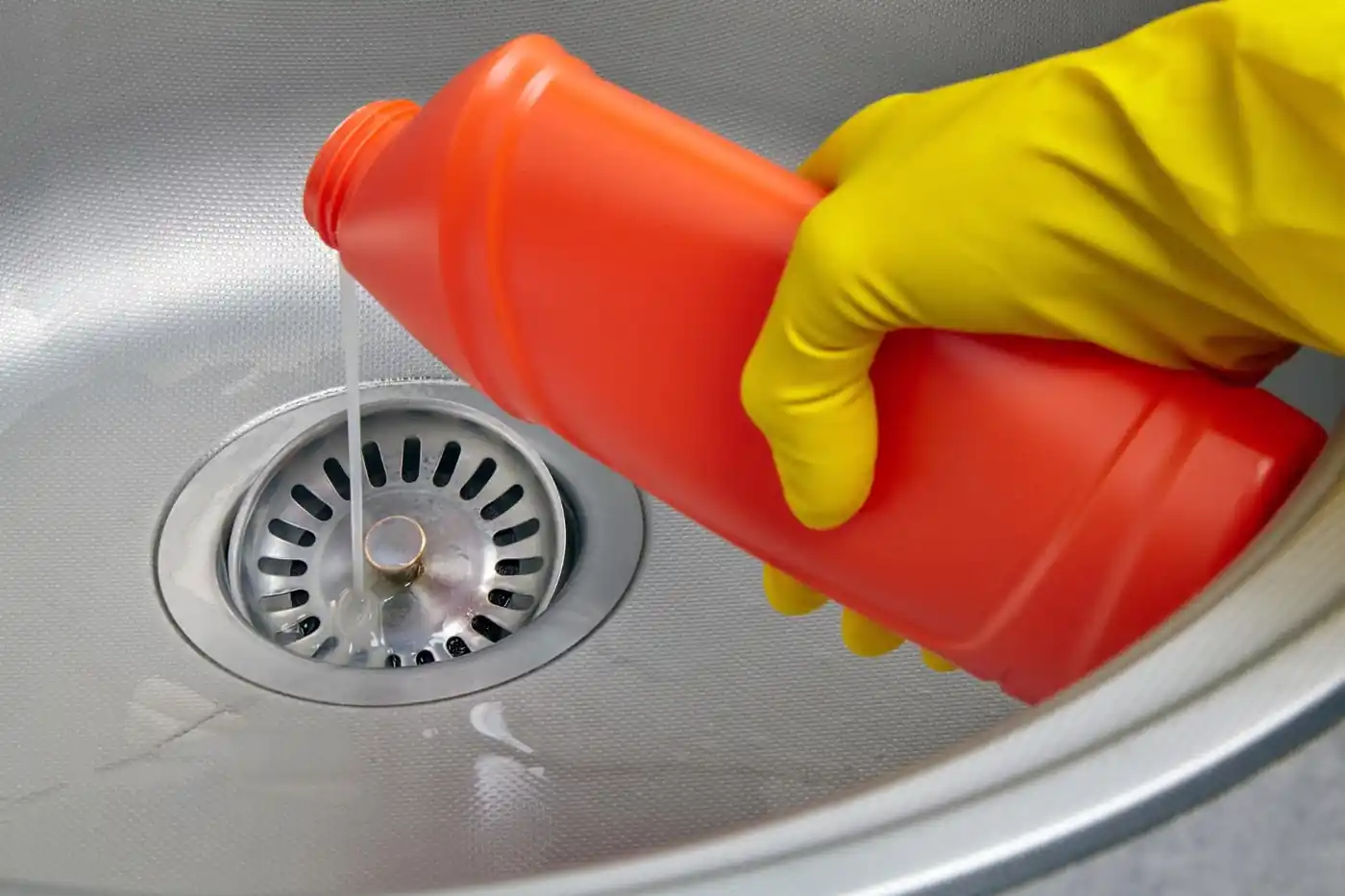
Chemical drain cleaners are bad for your pipes because they create extreme heat and chemical reactions that corrode metal, melt plastic, and weaken pipe joints over time. These harsh chemicals might clear your clog today, but they’re slowly destroying your Houston home’s plumbing system. Within just minutes of pouring drain cleaner down your sink, damage starts happening that you can’t see.
Most Houston homeowners grab a bottle of drain cleaner when they face a slow drain. It seems like the quick, easy fix. However, that convenience comes with a hidden cost that plumbers see every single day.
What Makes Chemical Drain Cleaners So Dangerous?
Store-bought drain cleaners contain extremely aggressive chemicals. These products work by generating intense heat—sometimes reaching temperatures of 200°F or higher inside your pipes.
The most common ingredients include:
- Sulfuric acid – Eats away at metal pipes and corrodes joints
- Hydrochloric acid – Destroys galvanized and older metal pipes
- Bleach – Reacts violently with other chemicals and damages seals
- Sodium hydroxide (lye) – Burns through organic matter and pipe materials
These chemicals don’t just dissolve hair and grease. They also attack the very pipes they’re flowing through.
How Chemical Drain Cleaners Damage Different Pipe Materials
PEX Pipes
Chemical cleaners can soften and weaken PEX pipes over time. While PEX resists some chemical damage better than other materials, repeated exposure causes brittleness. Eventually, the pipes become more prone to cracks and leaks.Galvanized Pipes
Houston homes built before 1980 often have galvanized pipes. Chemical drain cleaners accelerate the corrosion process that already affects these older pipes. The harsh chemicals eat through the protective zinc coating first. Then, they attack the steel underneath. This speeds up rusting and can cause pipe failure much sooner than expected.PVC and Plastic Pipes
Many people think plastic pipes handle chemicals better. That’s not true. Drain cleaners generate extreme heat that softens PVC joints and fittings. Over time, this weakening leads to leaks at connection points. Additionally, some chemical reactions can actually melt thin sections of plastic pipe.Copper Pipes
Copper pipes seem tough, but acidic drain cleaners corrode them from the inside out. The chemicals create pinhole leaks that start small but grow larger. These tiny holes often appear at joints and bends where the chemical sits longest.The Hidden Costs of Using Chemical Drain Cleaners
Think that $5 bottle of drain cleaner saves you money? Consider what happens next.
- Immediate pipe damage starts with your first use. The corrosion doesn’t stop when the cleaner washes away. Instead, the weakened areas continue breaking down.
- Repeated use multiplies the damage. Each time you pour chemicals down your drain, you’re compounding the problem. What could have been a simple drain cleaning service turns into expensive pipe repair or even full pipe replacement.
- Emergency repairs often cost 10-20 times more than the original clog would have cost to fix properly. Furthermore, water damage from burst pipes can run into thousands of dollars.
Why Houston's Water Makes the Problem Worse
Houston has notoriously hard water with high mineral content. When you combine hard water with chemical drain cleaners, you create an even more corrosive environment inside your pipes.
The minerals in Houston water react with drain cleaner chemicals. This reaction accelerates pipe corrosion and creates more buildup. Consequently, you end up with worse clogs down the road.
Hard water also leaves deposits that trap drain cleaner residue. These trapped chemicals continue eating away at your pipes long after you think they’ve washed away.
Chemical Drain Cleaners Don't Always Work Anyway
Here’s the truth: chemical drain cleaners often fail to fix the real problem. These products work best on soft clogs made of hair and soap.
However, they’re nearly useless against:
- Tree root intrusions
- Solid objects stuck in pipes
- Mineral deposits from hard water
- Grease buildup deep in your main line
When the cleaner doesn’t work, homeowners often pour more down the drain. This creates a pool of dangerous chemicals sitting in your pipes, causing even more damage.
Better Alternatives to Chemical Drain Cleaners
You have safer, more effective options for clearing drains:
Hot Water and Dish Soap
For minor clogs, this simple solution often works. Boil water and add a squirt of dish soap. Pour it slowly down the drain. The hot water melts grease while soap helps it slide through pipes.
Baking Soda and Vinegar
This classic combination creates a fizzing action that can break up organic clogs. Pour 1/2 cup of baking soda down the drain, followed by 1/2 cup of vinegar. Wait 30 minutes, then flush with hot water. According to the Environmental Protection Agency, these natural methods are safer for both your pipes and the environment.
Plungers
A good plunger creates pressure that can dislodge many clogs. Make sure you have the right type—cup plungers for sinks and flange plungers for toilets.
Drain Snakes
Manual or electric drain snakes physically remove clogs without chemicals. They’re reusable and won’t damage your pipes when used correctly.
Professional Drain Cleaning
Professional plumbers use methods that clear clogs completely without pipe damage. Hydro jetting, for example, uses high-pressure water to blast away buildup. This method cleans your pipes thoroughly without any harsh chemicals.

Warning Signs Your Pipes Are Already Damaged
If you’ve used chemical drain cleaners in the past, watch for these warning signs:
- Low water pressure – Corroded pipes restrict water flow
- Discolored water – Brown or rusty water signals pipe deterioration
- Water stains on ceilings or walls – Indicates leaks inside your walls
- Slow drains throughout your home – Multiple slow drains often mean pipe damage or buildup
- Visible corrosion on exposed pipes – If you can see damage outside, it’s worse inside
- Unusual smells from drains – Damaged pipes can trap debris and create odors
- Frequent clogs in the same location – Corroded pipes catch debris more easily
Any of these signs means you need a professional inspection right away. Waiting only makes the damage worse and repairs more expensive.
What Houston Homeowners Should Do Instead
When you face a clogged drain, skip the chemical cleaners. Instead, try these steps:
First, attempt simple mechanical methods like plunging or using a drain snake. These tools physically remove clogs without any damage to your pipes.
Second, if the clog persists, don’t pour multiple products down your drain. Different chemical cleaners can react with each other dangerously. Moreover, mixing chemicals creates toxic fumes.
Third, call a professional plumber before you cause permanent damage. Professional drain cleaning costs less than pipe replacement. Plus, plumbers can identify underlying problems that cause repeated clogs.
The Long-Term Impact on Your Plumbing System
Chemical drain cleaners don’t just damage one section of pipe. The chemicals flow through your entire drainage system.
Your main sewer line gets exposed to every chemical you pour down any drain. Over time, this exposure weakens the entire system. Ultimately, you might face a complete sewer line replacement instead of a simple drain cleaning.
Pipe joints and seals take the most abuse. These connection points are already stress points in your plumbing. Chemical exposure makes them fail faster.
Your home’s foundation can suffer if damaged pipes leak underground. Water from leaking pipes erodes soil and causes settling. This leads to foundation problems that cost tens of thousands to repair.
Protecting Your Plumbing Investment
Your home’s plumbing system represents a significant investment. Protecting it makes financial sense.
Schedule regular professional drain maintenance. This prevents clogs from forming in the first place. Annual or bi-annual drain cleaning keeps your system flowing smoothly.
Install drain screens to catch hair and debris before they enter your pipes. These simple devices prevent most common clogs.
Teach everyone in your household what shouldn’t go down drains. Grease, coffee grounds, and food scraps belong in the trash, not your plumbing.
When to Call Repipe Solutions Inc
Some situations require immediate professional help:
- Sewage odors coming from drains
- Gurgling sounds from toilets or drains
- Multiple drains clogging at the same time
- Standing water that won’t drain after several hours
- Water backing up into other fixtures when you use one drain
Don’t let a simple clog turn into a plumbing disaster. Our Houston team has seen too many homes damaged by chemical drain cleaners.
Take Action Now to Protect Your Pipes
Chemical drain cleaners might seem convenient, but the damage they cause isn’t worth the risk. Your pipes are too important and too expensive to replace because of a $5 bottle of chemicals.
At Repipe Solutions Inc, we help Houston homeowners protect their plumbing systems every day. Whether you’re dealing with a stubborn clog or worried about existing pipe damage, we’re here to help.
Contact us today for professional drain cleaning that won’t destroy your pipes. We offer same-day service, upfront pricing, and solutions that actually work. Don’t risk your home’s plumbing, call (832) 662-4288 now for expert help you can trust.
Your pipes will thank you for choosing professional care over harsh chemicals. Moreover, your wallet will thank you when you avoid costly emergency repairs down the road.